

Not everything should be a hotel
The problem with hotelification

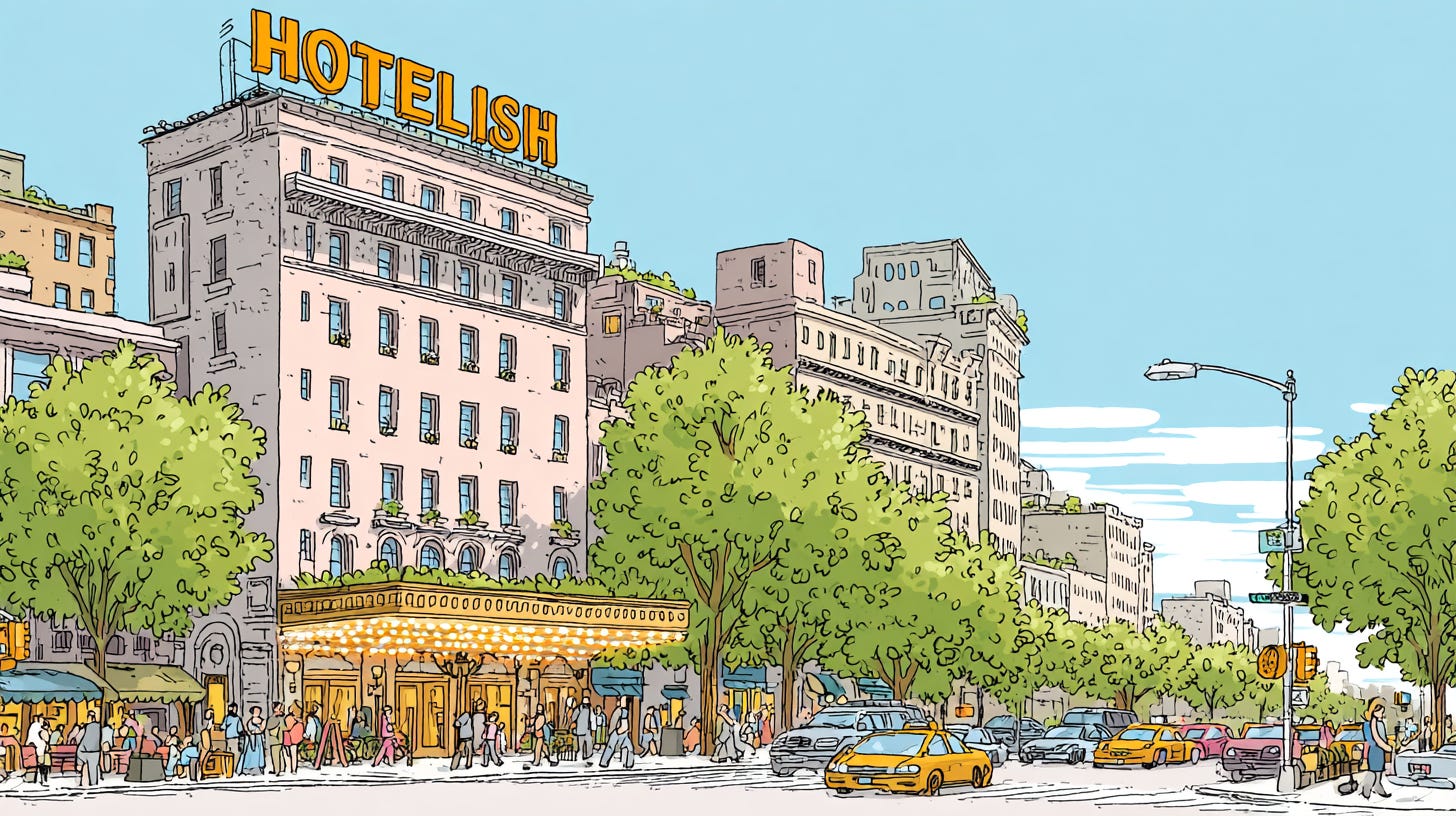
We love hotels.
The choreography of check-in: the discreet eye contact, the half-whispered greeting, the soft percussion of roller bags gliding across herringbone floors, the quiet triumph of handing over your credit card and ID before they even ask. The room: the click of the door latch, followed by that beat of suspended animation where you take everything in at once: the crisply tucked duvet with its hospital-corner precision, the soft lamplight, the constellation of perfectly arranged pillows no one has ever recreated at home. The desk stationery, of course: three cards, one envelope, a miniature notepad with an embossed logo. The ritualistic flip-through of the room-service menu, page by deliberate page, and the strange comfort of knowing you could order a $35 Caesar salad at 1:30 a.m. if your evening unravels that way. The mandatory evaluation of the toiletries: did they make the expensive choice (Aesop, Le Labo, Grown Alchemist) or default to pragmatic, but still lovely Public Goods? And then the in-between world: the hallway art, unit numbers, carpet, lighting; the wayfinding that ushers you forward and hopefully makes you feel something. The elevator ride where you get to silently invent the life story of whoever steps in next. The morning shuffle to the café. The lobby lounge, the most blissful arena for people-watching ever engineered. The bar, and its interesting glassware and eccentric bartenders. The restaurant, where the simple American breakfast—eggs, bacon, potatoes, toast—is undeservedly perfect. The rare routine that resembles home but feels infinitely more freeing: workout, meeting, food, lobby martini, elevator ride, adventure, escape, repeat.
Finally, the fact that when you’re done, it’s made anew; the room wiped clean, the pillows re-fluffed, every trace of your existence neatly erased. A different guest checks in, your chapter closes, and the hotel still waits for your return like you’re the one that got away.
You can’t beat hotels. They’re incredible.
And that’s exactly why you shouldn’t try to turn everything into a hotel.
Not your office. Not your apartment. Not your lobby. The magic of a hotel works because it’s a hotel. It’s a world designed for episodic intensity, not daily living and not scaling your business.
As the great late comedian Mitch Hedberg once said about turkey trying to imitate every other meat (turkey burgers, turkey bacon, etc.):
“Somebody needs to tell turkey: man, just be yourself.”
Same goes for hotels. Just be yourself.
Don’t get us wrong, there are so many elements of hotel design and branding that absolutely should migrate into other asset classes. So many. We emphatically believe in borrowing best practices across categories. Lateral thinking is a critical part of our work and company thesis.
But you have to remember what you’re designing and who you’re designing for. And you can’t just blanket your project with the words “hotelification” or “hospitality-driven” without understanding which parts of a hotel you’re actually trying to replicate.
Here’s how to think about borrowing from a hotel and where to change course.
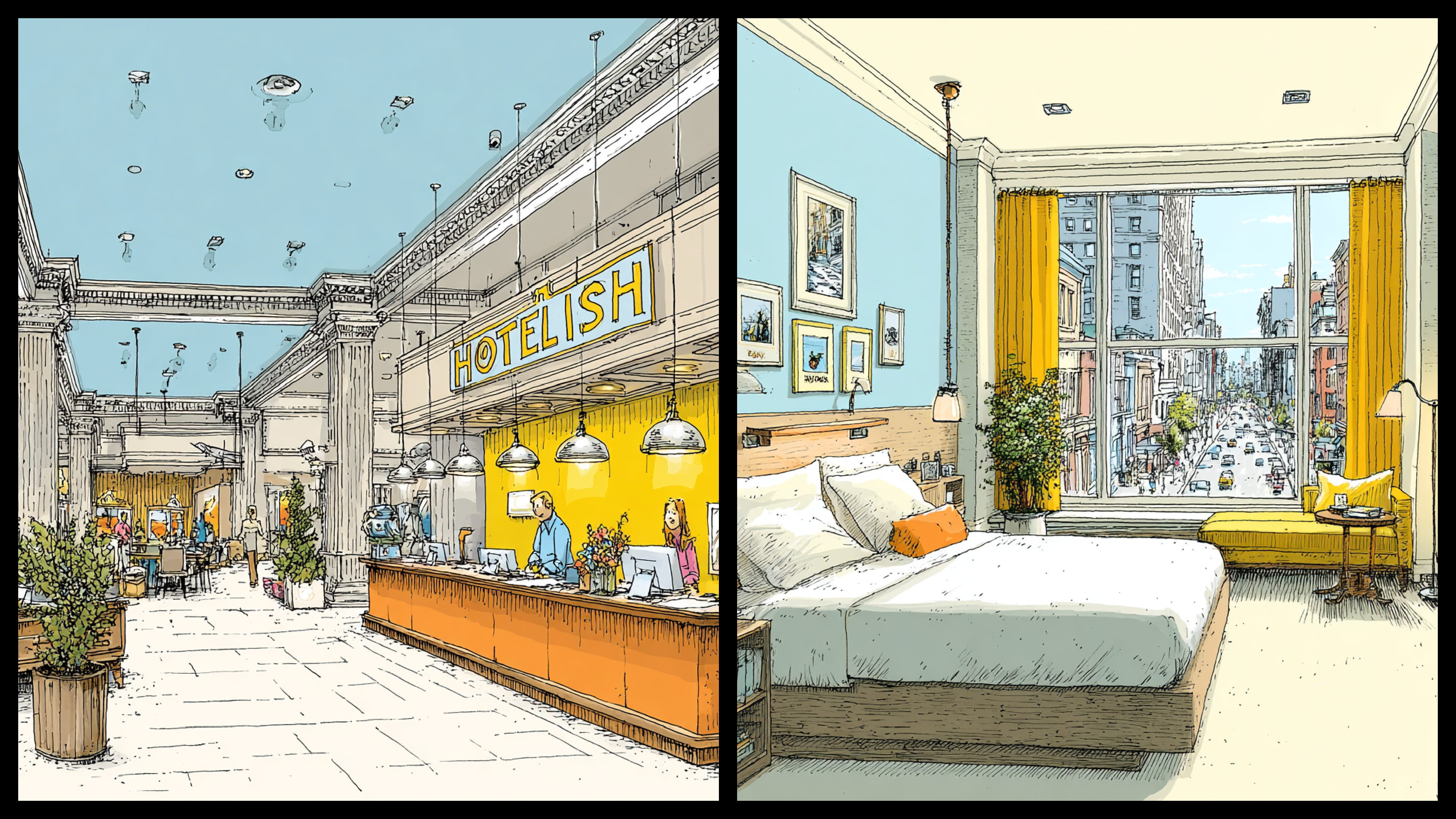
Borrow from hotels to story tell and enhance feeling. No matter what you’re building, use these ideas (in spirit, not in a copy and paste sense):
Digital storytelling – Pre-arrival emails (and text messages), evocative websites, brand films, and on-site content that set the emotional stage before anyone steps through the door.
Social media world building – Using IG, TikTok, and newsletters to make the space feel like a universe.
Emotion-worthy photography – Images that sell mood, light, and energy; not just fixtures and floor plans.
Lifestyle marketing – Casting, copy, and narratives that show how life feels there, well beyond the technical offerings.
Sensorial thinking – Light, sound, scent, and texture designed as a cohesive mix.
Art in the hallways – Curated visual moments that turn circulation into experience.
Cool wayfinding – Signage and environmental graphics that both guide and express the brand’s personality.
Hold-onto-this collateral – Keycards, matchbooks, notepads, postcards, and other small artifacts that people actually want to keep.
On-brand service moments – Small, repeatable gestures (welcome drink, check-in ritual, goodbye moment) that reinforce the story.
Integrated F&B – Coffee, bar, and dining woven into the spatial DNA.
Intimate common spaces – Lounges, nooks, and semi-public zones that make people feel comfortable lingering.
Arrival and departure choreography – The emotional arc of “welcome in” and “see you next time,” calibrated to your audience.
Tone of voice – How your staff speaks, how your signage reads, how your brand “sounds” in every interaction.
Service recovery mindset – Borrow the hotel instinct for fixing problems quickly, generously, and on-brand.
And more, this is just a sample.
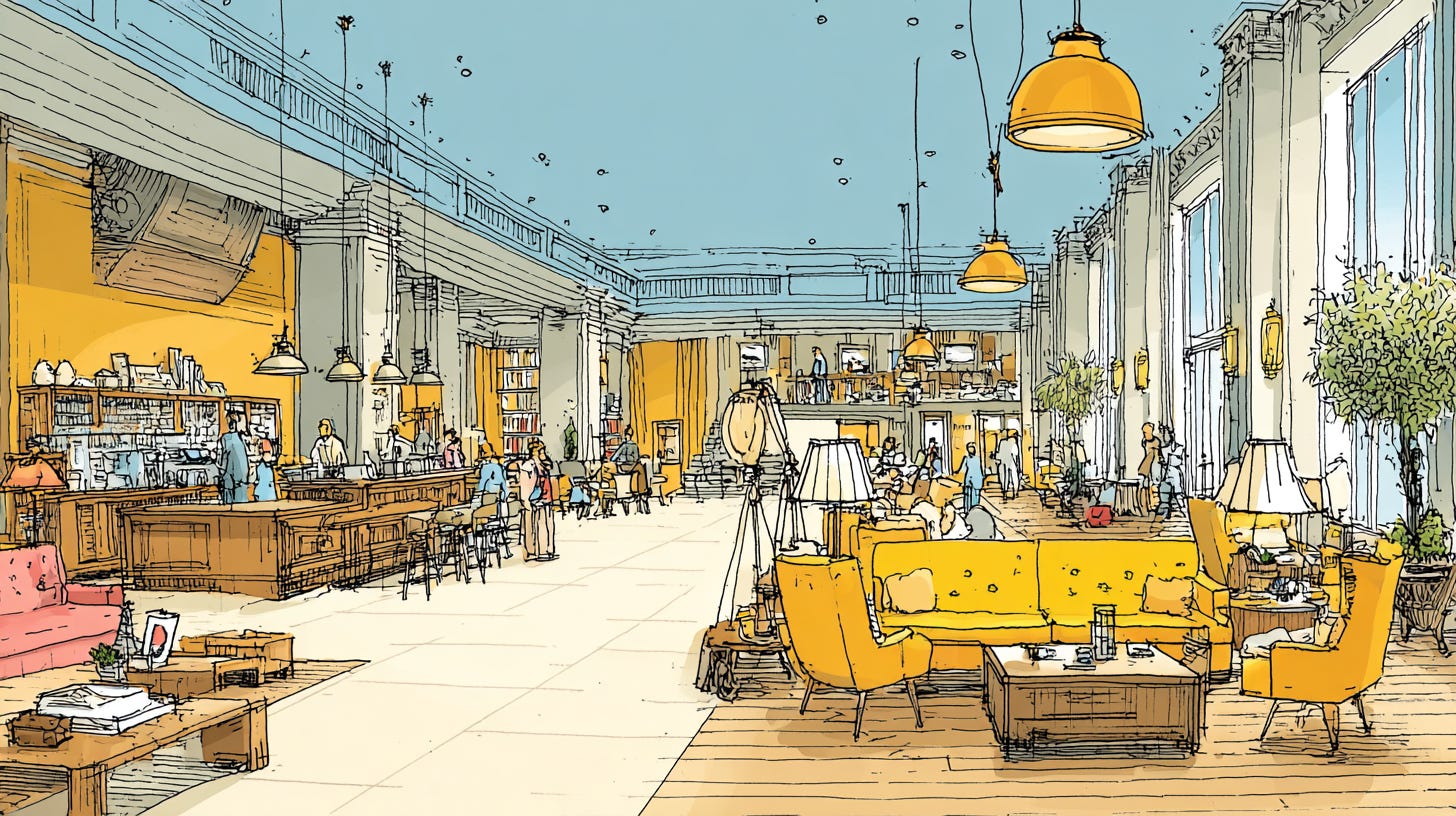
Start from scratch when you’re shaping behavior for a different type of space. These ideas should be customized entirely to your project.
User journey – The actual everyday rituals of the people using the place; how they arrive, move, linger, and leave on a normal day.
Operational choreography – How staff move, where they stage, how back-of-house interfaces with front-of-house without breaking the spell.
Access control and privacy gradients – What’s public, semi-public, resident-only, member-only; how thresholds are signaled and enforced.
Spatial hierarchy – Which zones get priority (work, rest, social, transit) and how they relate to one another over the course of the day.
Program mix – The specific set of uses your audience actually needs (workspace, childcare, fitness, storage, retreat, etc.).
Daypart transitions – How the same square footage behaves at 8 a.m., 2 p.m., and 8 p.m. including lighting, furniture, staff posture, and sound.
Behavioral zoning – Where focus happens, where social energy happens, where noise is allowed to spike, etc.
Durability and maintenance – Materials, finishes, and cleaning protocols that match real usage.
Staffing model – Who you hire, what they’re trained for, and how their roles map to your brand positioning.
Pricing and access logic – Membership, drop-in, resident perks, guest passes; how people actually pay for and earn their way into the experience.
Local context – How the space plugs into neighborhood patterns: kids, commuters, nightlife, seniors, tourists, regulars.
Rules of engagement – Norms around noise, guests, pets, laptops, phone calls, codified in a way that feels on brand.
Feedback and iteration loops – How you listen, measure, adjust, and continue to refine the hybrid over time.
And more. Again, these are just samples.
Despite what people post on Linkedin, hotelification isn’t about making everything look like a hotel or bolting a coffee bar onto every lobby.
It’s about translating the emotional outcome of a great stay; the sense of being cared for, oriented, energized, and lightly lifted out of your own life into the places people actually use every day. It’s about understanding why a space exists, viscerally experiencing its personality, and being stepping into another aspirational world.
As residents demand more from where they live and as office users weigh every commute against the comfort and control they have at home, just copying hotel lobbies won’t cut it.
What matters is whether your space can deliver that same magic of possibility without pretending to be a front desk. If you can do that—design for the feeling, not just the aesthetic—your building doesn’t need to be a replica hotel. It just needs to be unmistakably itself and undeniably worth leaving the house for.

Missed our last article? Read it now.

Missed our feature in The Brand Identity? Check it out now.



🚨 WHO IS NO WALLS STUDIO (AND WHAT DO WE DO)?
No Walls Studio is a design and brand consultancy that helps real estate developers create spaces that people love.
Our mission is to make sameness extinct in real estate, which means that everything we do comes with new ideas and unique angles — all, grounded in a deep understanding of culture and consumers.
We do three things for our clients (often, all in the same project):
Research & Insights
Brand Development
Spatial Experience Design
Want to work with us or learn more?


Insightful breakdown of what makes hotel magic actually transferrable. The distinction between borrowing emotional choreography versus copying operational structure is crucial and often missed. I've seen so many projects fail by importing hotel aesthetics without understanding that hotels work precisley because they're transient spaces, and applying that transience logic to daily rituals just creates friction instead of flow.